Begin with the model and destination
A useful document request names the goods being purchased and the purpose of the review. Include the brand, model, relevant shades, destination market and any version or batch requirement. Your importer or adviser can then identify the information needed for that purchase.
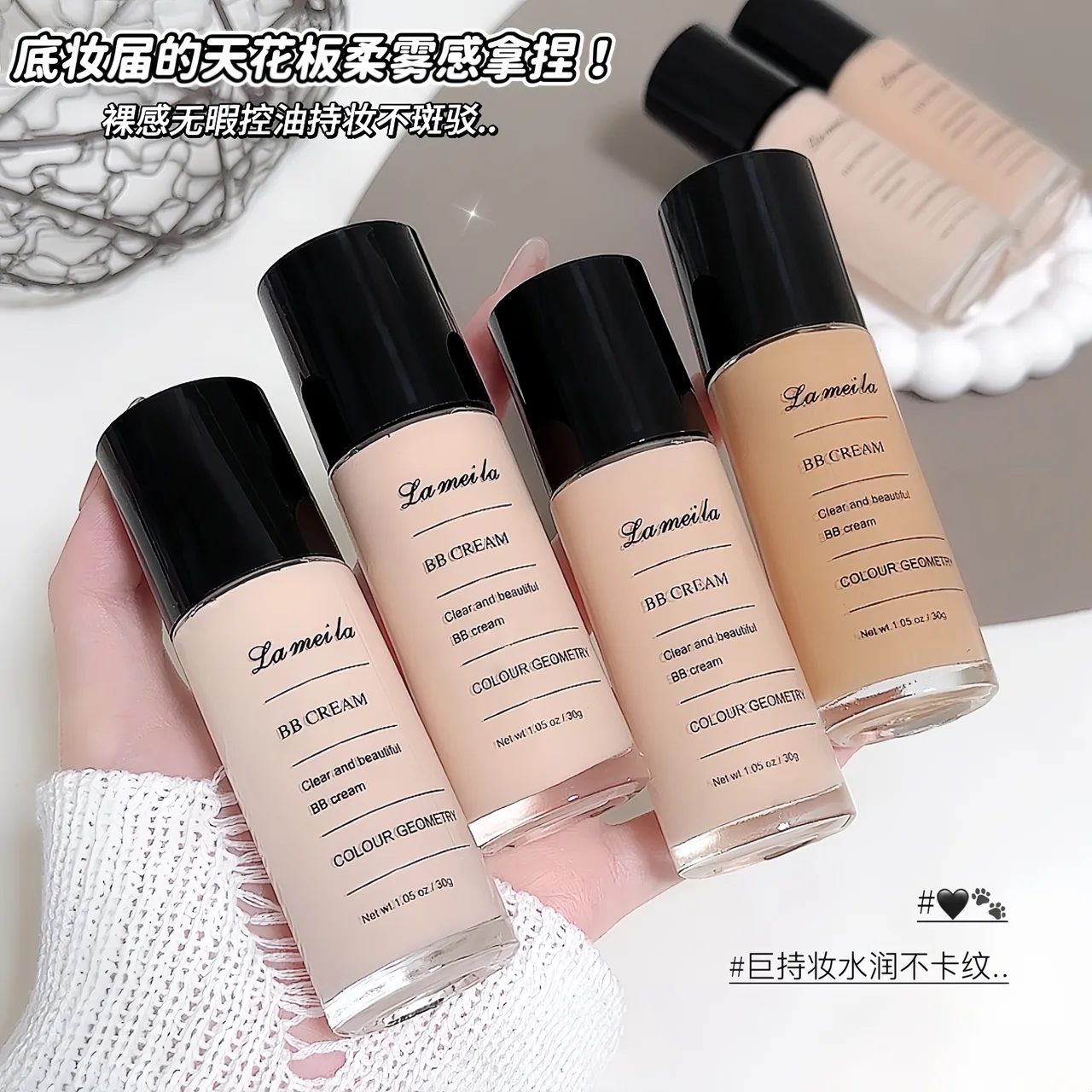
For example, if you intend to buy LAMEILA 3319 BB cream, attach the request to model 3319 and its selected shades. This gives the supplier a clear product reference instead of a broad request for every cosmetics certificate.
Keep three kinds of records separate
Scroll across to compare all columns →
| Record | Purpose | Details to match |
|---|---|---|
| Company and manufacturing | Understand the legal company and manufacturing scope | Company name, site, certificate holder, scope, dates and status |
| Product information and reports | Review the selected product for its intended use and market | Model, formula or version, shades, ingredients, label and report coverage |
| Order and shipment | Identify the goods and quantities being supplied | Quotation, commercial invoice, packing information and agreed shipment records |
Ask the responsible importer or qualified adviser which records are required and when. A document needed before the buying decision should be discussed before the order is confirmed.
Read the scope of factory certificates
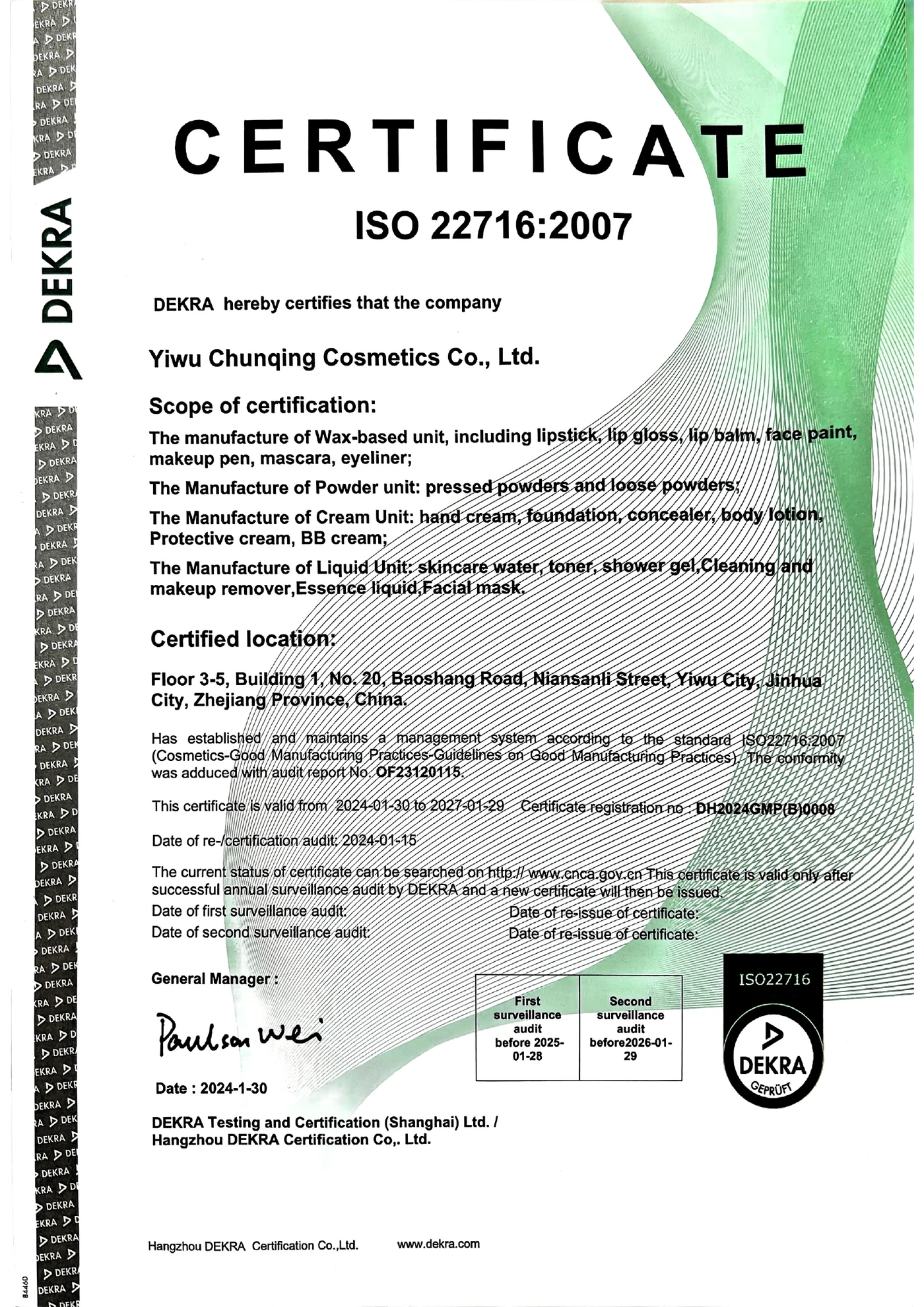
Chunqing's quality and documents page includes ISO 22716 and GMPC certificate scans naming Yiwu Chunqing Cosmetics Co., Ltd. Read the holder, manufacturing scope and printed dates on the actual scan. Check current status with the issuer when your review requires it.
Manufacturing-system certificates serve a different purpose from an ingredient list, product test report or batch-specific analysis. They do not establish that every catalog product is approved for every destination. An MSDS or SDS likewise needs to be matched to its purpose and product coverage.
A document request you can send with your model list
For each row record the brand and model, packaging version, batch where applicable, destination country, document title, holder or issuer, date/version, applicable scope and next person to confirm it. Start with the files already supplied; request only missing links or unresolved applicability.
Swipe horizontally to view all columns.
Scroll across to compare all columns →
| Document group | Match before accepting | Next action / owner |
|---|---|---|
| Product identity and ingredients | Brand, model, packaging version and destination; ingredient list applicable to this version | Supplier supplies the applicable file; importer checks local requirements. |
| Batch quality or test record | Model and batch, tested sample, test scope, issuer and date | Supplier identifies the available record; buyer checks whether it matches this order. |
| Label, barcode and carton information | Current packaging, label language, carton quantity and shipping marks | Supplier confirms the packing file; importer confirms destination label requirements. |
| Invoice, packing list and transport documents | Order identity, quantities, shipment and consignee details | Supplier and forwarder confirm the required shipment documents and timing. |
| Factory certificates | Certificate holder, factory site, scope and printed dates; current verification when needed | Use the existing factory records for their stated scope, not as substitutes for every product or batch document. |
Use separate statuses: not yet linked in the document list; confirmed unavailable after checking; not applicable with a reason; identity or scope conflict requiring resolution. “Not yet linked” does not mean the factory has no file. Do not mark an unresolved row approved; record who will confirm it and by when.
Make the request easy to answer
List each required document beside its model. State the intended use, destination, necessary version or batch coverage and the date your team needs it. If a file does not identify the product clearly, ask how it relates to the formula or version you plan to buy.
Keep the final records with the agreed quotation and product list. When reordering, review changes in product, packaging or destination before reusing the previous document set.
Send your requirements with the model inquiry list or through the inquiry form. This keeps the document discussion connected to identifiable goods and an actual purchasing decision.